Britain Hiked Rates on Inflation It Can't Control
The Bank of England raised rates for the first time since 2023, voting 8-1 to lift Bank Rate to 4% as Middle East energy costs push inflation toward 5%. The committee framed the step as insurance against pipeline pressure it cannot control at source.
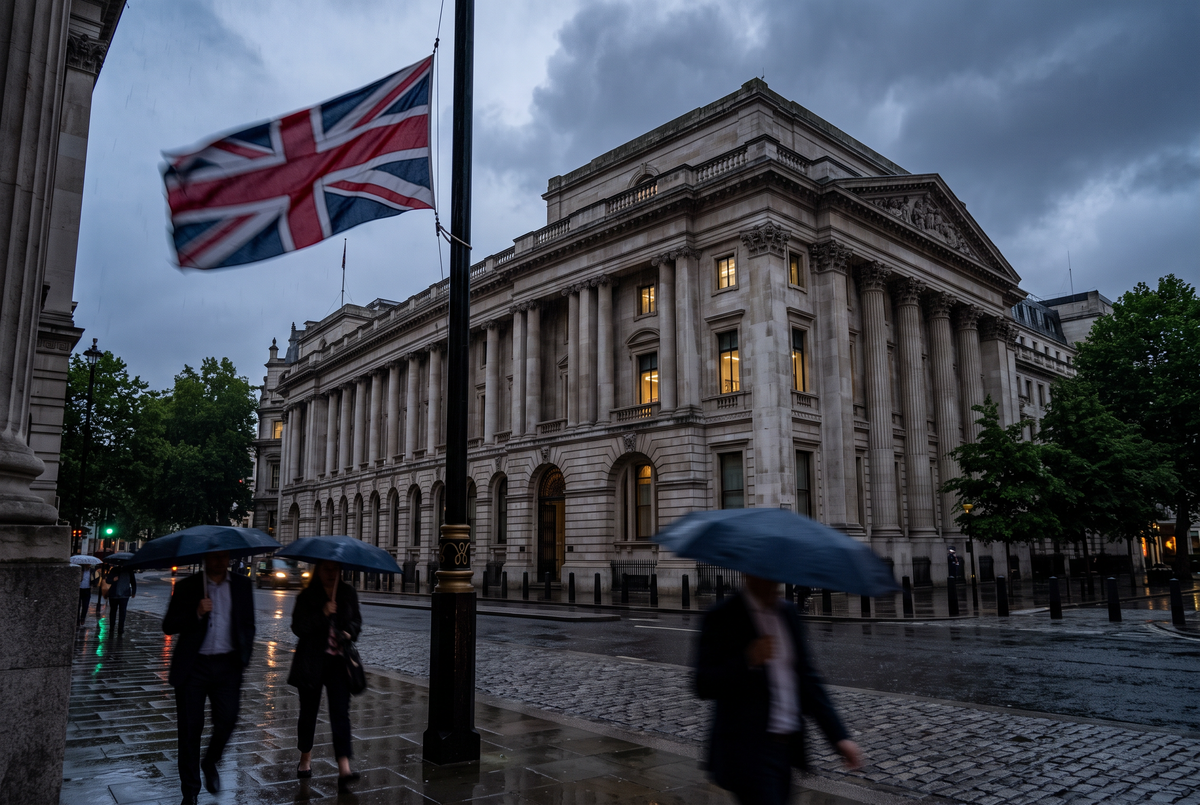
The Bank of England has raised interest rates for the first time in more than three years, and every member of its Monetary Policy Committee agreed the move was necessary. The inflation forcing the change is flowing through the oil and gas markets tied to the conflict in the Middle East, a channel the Bank itself says monetary policy cannot redirect.
The committee voted 8-1 to raise Bank Rate by 0.25 percentage points to 4%. Catherine Mann, the most hawkish member, dissented and pushed for a half-point rise to 4.25%. She argued the economy had "crossed the estimated statistical threshold into a high inflation-tight labour market regime" and called a 50-basis-point move "good policy". The increase is the first since August 2023.
UK CPI inflation climbed to 3.5% in September, propelled by motor fuel costs. The Bank now expects inflation to reach around 5% by the middle of next year, more than double its 2% target, before easing as the drag from energy fades. That forecast is what moved rates. The committee has not pointed to a wage spiral it can already measure.
An imported energy shock
The MPC said "the conflict in the Middle East is now in its ninth month" amid rising global energy prices. Front-month Brent crude averaged $108 a barrel over the 15 UK working days to 27 October, a 38% rise since the Bank's July report, while UK front-month natural gas averaged 216 pence a therm, up 81%. Those prices are feeding the motor-fuel component of CPI and carrying inflation toward 5%.
The Bank acknowledged it could not influence global energy prices, and that while the direct effects of higher energy costs are clear, there remains "limited evidence of knock-on effects on other prices and wages". That pairing is the policy problem in a single meeting. Imported energy can push CPI higher even if UK wages and other prices have not yet followed. Raising Bank Rate will not bring Brent down from $108 or UK gas down from 216 pence a therm. It is meant to cap the chance that those direct effects harden into a broader inflation process.
Insurance against what comes next
The MPC justified the step because "the degree of inflationary pressure in the pipeline is now sufficient to warrant an increase in Bank Rate". Governor Andrew Bailey tried to bound the decision: "Today's increase should not be seen as the first in an inevitable long sequence of hikes... But unless the conflict in the Middle East is resolved, neither does it seem likely to be the last increase."
External member Alan Taylor framed it as a risk-management "one-for-now" insurance hike rather than "the start of a hiking cycle". Bailey's wording and Taylor's label describe the same quarter-point step: higher rates now, no promised sequence, and more possible if the conflict drags on. Mann wanted a larger increase on the view that the economy had already crossed into a high inflation-tight labour market regime. The majority took the smaller move and the pipeline language.
Two-year gilt yields climbed to 4.782% after the decision, with the 10-year yield reaching 5.1546%. The Bank of England is the last major central bank to start tightening since the conflict began eight months ago; the Federal Reserve and European Central Bank moved before it.
The first increase in more than three years was, on the committee's own terms, a response to inflationary pressure in the pipeline and a guard against second-round effects that have not appeared yet. Every member voted for higher rates, but none can set the oil price. Unless the conflict lifting energy costs is resolved, Bailey has already signaled this is unlikely to be the last increase. Britain is buying insurance against an inflation its central bank has admitted it cannot control.