Democrats Sweep Congress, and Markets Unwind the Trump Trade
Democrats won the House and Senate in the midterms. U.S. stock futures, the dollar, and Asian equities sold off as investors priced in tighter spending and pressure on the AI trade.
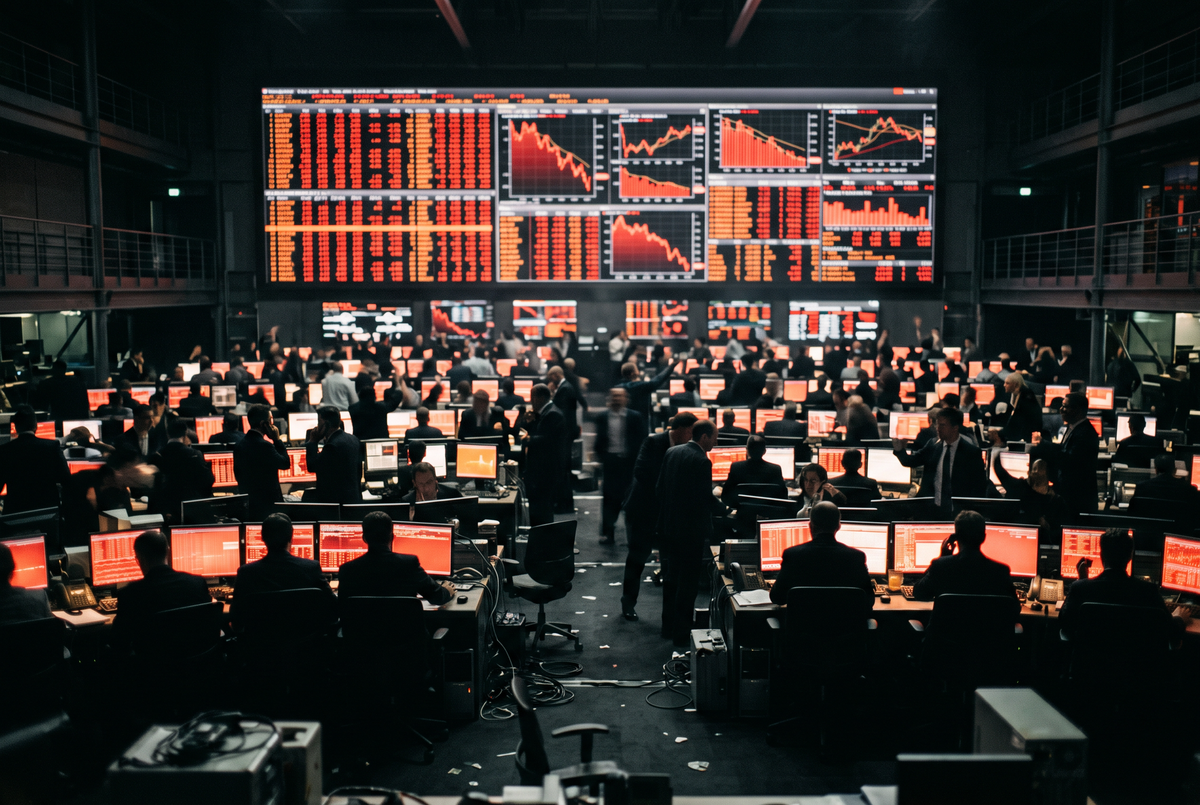
Democrats won control of both the U.S. House of Representatives and the U.S. Senate in Tuesday's midterm elections, giving the party full control of Congress for the final two years of the administration's term. Markets did not wait for the legislative calendar. Overnight, U.S. stock futures, the dollar, and Asian equities moved lower together as investors reversed positions built around a different congressional map.
Global stocks slumped and the dollar softened as the result fueled fears that a "blue sweep" could disrupt the data-center build-out that has powered the AI trade and hurt technology spending. The damage clustered in U.S. index futures first, then spread across Asia's cash open.
What the overnight tape showed
S&P 500 futures fell as much as about 1.3%, Nasdaq 100 futures about 2.2%, and Dow Jones industrial-average futures about 0.8%. The U.S. dollar index fell about 0.5% to roughly 101.3. The benchmark 10-year Treasury yield dropped about seven basis points to roughly 4.89%, with yields lower across the curve. Japan's Nikkei fell about 3.5% and South Korea's KOSPI slid about 3.6% as Asia opened.
The ranking inside the move is the market's first read. Nasdaq 100 futures led the U.S. complex lower, and two cash indexes that trade global technology hardware, the Nikkei and the KOSPI, each fell more than 3%. The dollar and the Treasury curve moved in the same direction: a softer DXY and yields down across maturities.
Spending, the dollar, and Treasuries
Nomura senior rates strategist Andrew Ticehurst said a rising probability of a "blue wave" was "generally regarded as being negative for the dollar and positive for US Treasuries." Commonwealth Bank of Australia currency strategist Carol Kong said a Democratic sweep would limit government spending for the remainder of the term and could push the dollar lower.
The overnight tape printed exactly that mix. A Congress expected to limit spending is a Congress with less room to add fiscal support, and lower yields plus a weaker dollar are the rates-and-currency expression of that read. Neither strategist was pointing at a single company or bill; both were describing the mechanical response to a higher chance that Democrats would hold both chambers, which is now the result.
Where the equity pain hit hardest
The stock side of the session was uneven. Nasdaq 100 futures, down about 2.2% at the worst, fell far harder than Dow Jones industrial-average futures, down about 0.8%. The fear attached to the result is specific. A blue sweep, in the market's read, raises the odds of disruption to the data-center build-out behind the AI trade and to technology spending more broadly.
That is a political overlay layered onto a market that has not seen a new earnings print or an economic data shock. How far Democratic control actually reaches into technology budgets is the part investors are now marking in real time. The overnight evidence shows no statute, no committee vote, and no cancelled project. It shows a market pricing a wider discount on the spending path that has supported the AI trade.
Whether Tuesday night was a positioning flush or the start of a slower repricing is something one futures session cannot settle. The election result is the stable fact. Futures, the dollar, and Asian equities sold off; Treasury yields fell. What remains open is how far equities carry the AI half of that story once U.S. cash trading gets its first real look.