Mitsui Chemicals Is Buying Twice Its Size to Lead Chip Materials
Mitsui Chemicals agreed to buy photoresist maker JSR for 1.84 trillion yen, roughly twice its own market value, funded by a 1.64 trillion yen bridge loan, a share sale and a state-bank stake. Its shares fell 9% on the news.
Mitsui Chemicals signed a share purchase agreement on Monday to acquire JSR, the Japanese semiconductor-materials maker, from investment funds managed by JIC Capital, in a deal that makes JSR a consolidated subsidiary of the chemicals group. The total consideration comes to 1,840 billion yen, which Reuters values at about $11.6 billion at 158.45 yen to the dollar. The equity component is 1,392.1 billion yen, including a 200 billion yen investment from the Development Bank of Japan, with interest-bearing debt and other items accounting for the remaining 447.9 billion yen, according to the same disclosure.
The scale is the story. Mitsui Chemicals’ market capitalization stood at 664.6 billion yen per LSEG data based on the latest closing price, meaning the company has agreed to pay a purchase price worth more than twice its own market value. Investors read it the same way: the shares slumped 9 percent Monday, extending their slide from last week, when Reuters reported Mitsui was the final buyer.
How a 1.84 trillion yen deal gets paid for
The financing stack is where the deal gets unusual. Mitsui has lined up a 1,640 billion yen bridge loan from its principal relationship banks, which it plans to replace with permanent financing through bank loans, bonds and equity. To make that transition digestible, it wants rating agencies to recognize the equivalent of 300 billion yen as equity within a year of closing: at most 150 billion yen of common-share funding, including treasury shares, via the shelf registration filed Monday, plus half of a 300 billion yen mezzanine tranche. Mitsui is targeting an issuer credit rating in the A category, and the disclosure is candid about the cost: net debt to EBITDA is expected to temporarily exceed four times after completion. On top of the debt, DBJ itself is putting in 200 billion yen, taken entirely in non-voting preferred shares under a shareholders’ agreement.
The structure splits the burden three ways: commercial banks carry the near-term debt, the equity market absorbs the refinancing, and a state bank takes a preferred stake that does not dilute voting control. That combination is what allows a company of Mitsui’s size to sign a purchase agreement this large at all.
What Mitsui is actually buying
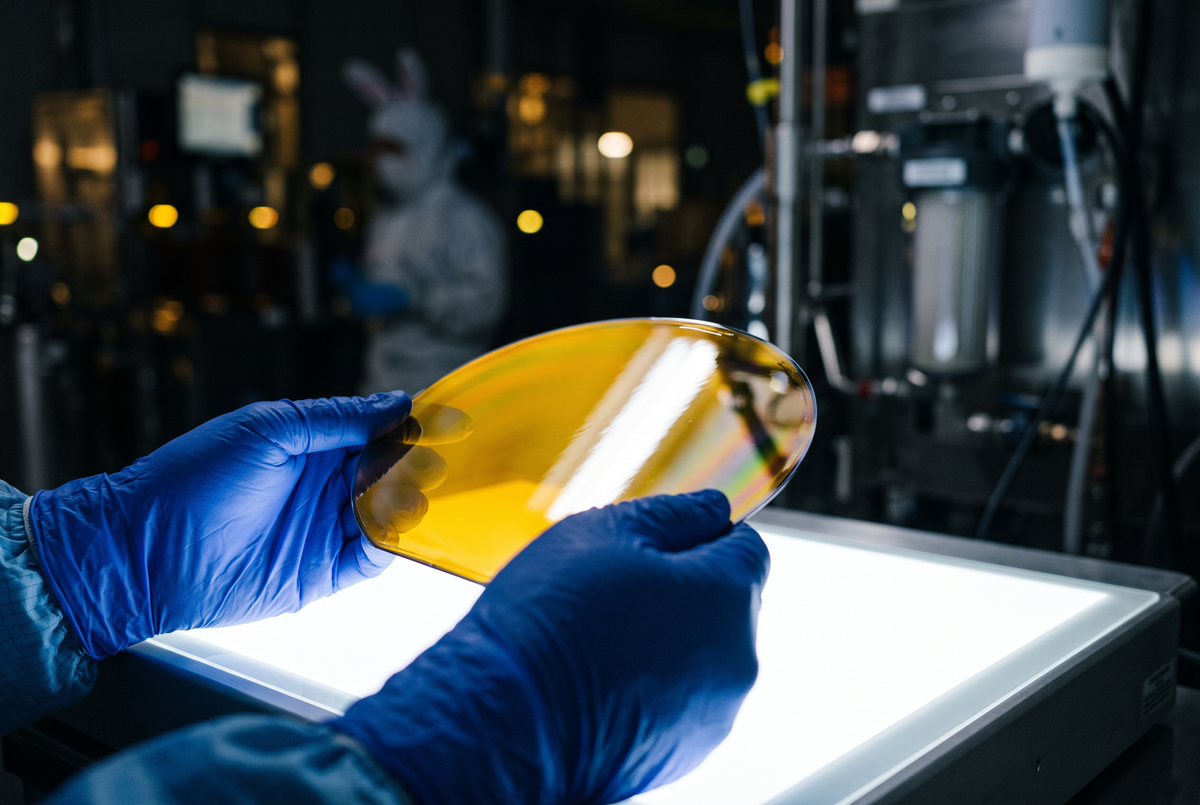
JSR sits near the top of the semiconductor supply chain in a niche with few rivals. The company ranks second globally in ArF and EUV photoresists, the light-sensitive coatings used to transfer circuit patterns onto silicon wafers, and Mitsui’s investor presentation claims it is the only company able to offer both chemically amplified and metal-oxide resist solutions for EUV lithography. The business is growing: JSR’s semiconductor materials sales rose from 157.9 billion yen in fiscal 2024 to 196.0 billion yen in fiscal 2025.
Mitsui expects the acquisition to add roughly 40 billion yen in annual incremental profit by fiscal 2035, a figure to weigh against the 1.84 trillion yen outlay and the debt taken on to fund it. The company has also committed to portfolio surgery on its new subsidiary: it plans to sell off JSR’s life sciences unit and other non-core businesses to raise the unit’s value, with the stated goal of regaining a sound financial position within three years.
The seller’s exit, and what it says about policy
The other half is who is selling. JIC bought JSR for 900 billion yen in 2024, and said at the time it intended to use the business to promote consolidation across Japan’s semiconductor materials sector. Two years later, the state-backed fund is handing the asset to an industry consolidator at a price well above what it paid. The tender offer for JSR’s listed shares closed on April 16, 2024, and the stock was delisted from the Tokyo Stock Exchange’s Prime Market on June 25, 2024, according to the buyer’s filing.
Nikkei had reported on November 4, when the sale was still estimated above 1.3 trillion yen, that the deal would become the largest acquisition in Japan’s chemicals sector. Whether that record holds as framed, the transaction is at minimum among the largest in the industry and more than double Showa Denki’s $4.55 billion purchase of Hitachi Chemical in 2020.
What comes next
Closing is targeted for the second half of the fiscal year ending March 2028, subject to competition-law and foreign-investment clearances in Japan and overseas. In connection with the deal, Mitsui has also revised the scope of its planned split-off of the Basic & Green Materials business to add the Mobility Solutions business to that perimeter, as the group reshapes beyond its balance sheet.
The deal is a stress test of how far a Japanese industrial will stretch its balance sheet to own a chokepoint in the chip supply chain. If the three-year deleveraging plan holds, JIC’s exit will look like policy working as designed: the fund found a buyer willing to pay more than twice its market value for the assets, and handed the consolidation mandate to the industry itself. If it does not, the 1.64 trillion yen bridge loan will be the number everyone remembers.